OpenDialog July 2026 – Issue Three
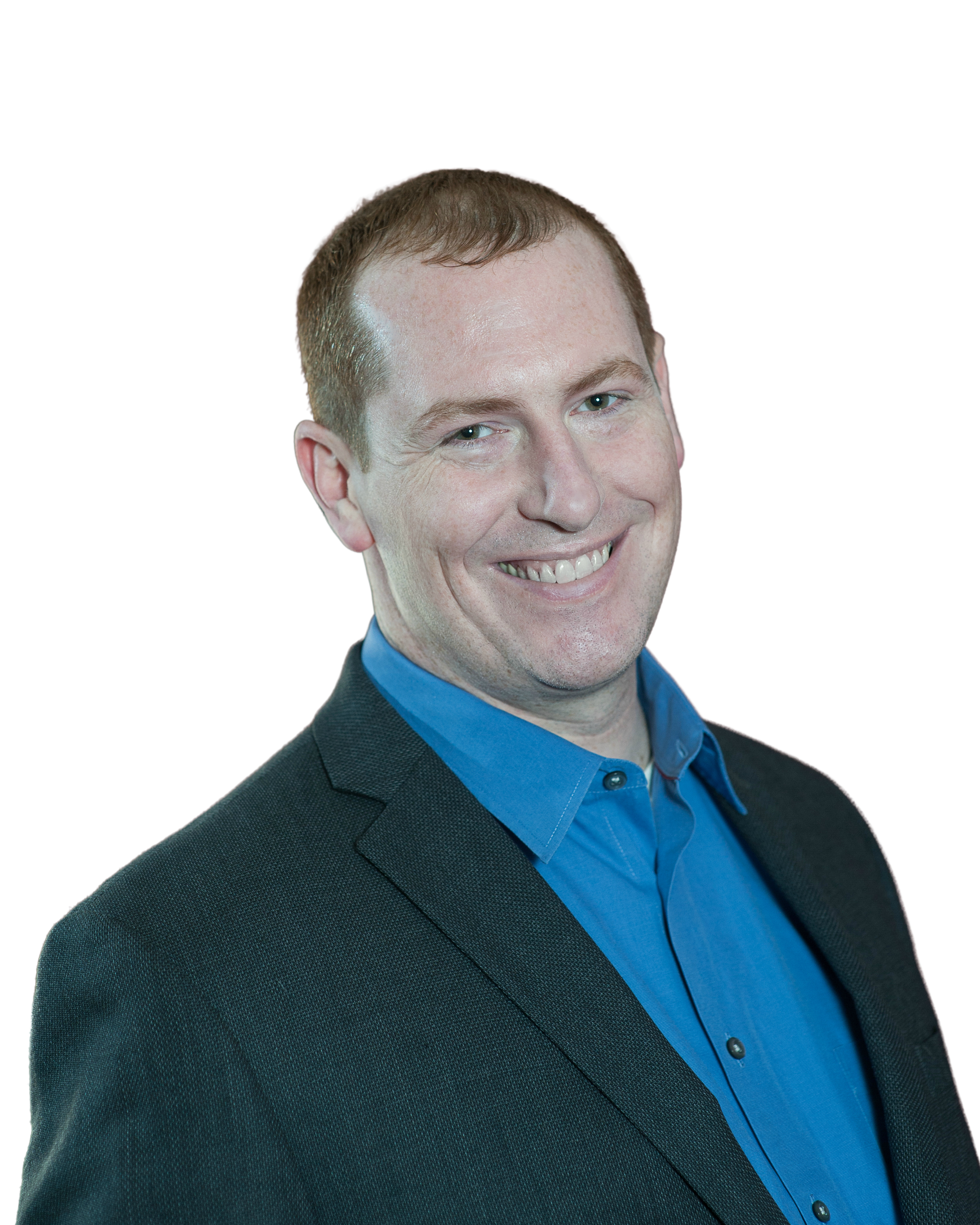
This month’s Q&A features the CEO and Co-Founder of the Peggy Lillis Foundation (PLF), the leading nonprofit organization that is building a nationwide C. diff (Clostridioides difficile) awareness movement by educating the public, empowering advocates, and shaping policy. He is Christian John Lillis, a tireless advocate, fundraiser and thought leader; and most critically, Christian is the eldest son of Peggy Lillis who died tragically at the age of 56 from C. diff.
His mother’s untimely death is and was the impetus for the Foundation. As its head, he has led nine national convenings of C. diff Advocates, built a 50-person volunteer Advocates Council, coordinated the first-ever C. diff Lobby Day on Capitol Hill, and produced the first-ever public service announcement on C. diff infections.
His work has been recognized by the Center for Disease Control (CDC) through its Excellence in Partnership Award for domestic advocates and organizations; and he has been a contributor to the Baltimore Sun, Cleveland Plain Dealer, and the CDC’s Safer Healthcare Blog. He has also co-authored articles for journals, including Advances in Therapy and the American Journal of Gastroenterology. Welcome Christian.
Q&A
Q: What drives the Foundation’s advocacy work?
A: It’s a mix of rage, grief, and hope. Rage at a healthcare system that seldomly prioritizes patients. Despite our country spending more money on healthcare than any other nation, our outcomes are terrible. The inconsistent approaches to infection control and prevention, the over-prescribing of antibiotics, and barriers to patient engagement are unacceptable. Often, good, decent people are afraid of their capacity for rage. And they’re right to be. Rage directed at the wrong target can be incredibly destructive. But rage directed at injustice, inequity, and oppression is what animates every human rights movement. We’ve seen that during the Civil Rights Movement and among AIDS organizations such as ACT UP. Our strategies and tactics are different, but the people who unnecessarily suffer from C. diff or lose a loved one to it are full of rage. And we affirm that and help them direct it toward meaningful change.
Then there is the grief of losing my mother in the prime of her life. Because she had me at 19, I assumed I would have her until I was old myself. Instead, we lost her when I was 36, and my brother was 33. She has an 8-year-old grandson who will only know her through pictures and stories. Before my mother became ill, I had never heard of C. diff. Learning that it kills more people than HIV/AIDS, with virtually no public awareness campaigns and very little effort to control it back in 2010, magnified our grief 29,000 times.
That mix of rage and grief is what propelled us in the early years. But what has kept us going, and arguably made PLF as successful as it’s been, is hope. My mother was an optimist. I am not. But I am a hopeful person. While horrible things happen, most people are well-meaning and will offer help when it’s needed. In the months after Mom died, I reached out to so many people I knew, even strangers. Without exception, they were willing to share their advice, skills, and resources. I am forever grateful to Dr. Cliff McDonald at the Centers for Disease Control. who spent over an hour with me. Those initial conversations gave me hope that my mother’s death would not be in vain.
Over the past 16 years, I’ve kept finding reasons to hope, mostly through the community and movement that Peggy Lillis Foundation represents. My mother always told my brother Liam and me that “all we have in this world is each other.” And that is true. Meeting hundreds of C. diff survivors and family members, many of whom have taken action to raise awareness, join our Lobby Day, provide peer support to current sufferers, and share their stories with the media, continually infuses me with hope. I would also include all the good people who work in biotech and in our public health infrastructure, who are fighting every day to discover and deliver new drugs, diagnostics, and preventives to patients. I often tell our volunteers that losing our mother was the spark that started this organization and movement, but they’re the fuel that keeps us going.
Q: What are the three critical messages around access?
A: “Access” is a very tricky word. It is widely used in healthcare, often to suggest that a patient can get the test or treatment they need. But while they technically could access a drug or test, meaning it’s Food and Drug Administration-approved. They have a prescription, but “access” falls apart when a patient’s insurance will not cover a drug, they can’t afford the drug or a test out of pocket, or they face logistical hurdles like a hospital not keeping the medication on its formulary.
For me, three things must change for patients to receive optimal C. diff treatment, particularly the FDA-approved live biotherapeutic products, like Rebyota and Vowst.
First, the clinical guidelines must be updated. IDSA has not updated its guidelines for C. diff since 2021. That’s five years in which the FDA approved two new C. diff drugs. The American College of Gastroenterology has similarly not updated its guidelines. The American Gastroenterological Society is the only professional association that has recently offered updated guidelines. Unfortunately, those guidelines, while well-intentioned, are at the root of many insurance denials. Because the guidelines conflate standard fecal microbiota transplant (FMT) with the new LBPs, insurance companies that do not wish to pay can cite guidelines requiring three or more recurrences before paying for these drugs. Since standard FMT was and remains an experimental therapy, guidelines that fail to differentiate recommendations for FDA-approved therapies create a loophole that payers can and do exploit. Both LBPs were approved at first recurrence, but the payers insist that patients undergo three or four rounds of failed antibiotic therapy before they approve them.
Second, insurers – particularly Medicare and Medicaid – need to stop being pennywise and pound-foolish. The vast majority of C. diff patients receive vancomycin for their initial infection because it is considered cheaper than fidaxomicin. The problem is that vancomycin fails to cure around 30 percent of C. diff patients, which leads to more vancomycin. In many cases, patients may undergo two rounds of vancomycin, followed by an 8- to 12-week taper. At this point, the patient has likely been ill for several weeks or months. And the cost of their care has gone from being $500 versus $4,000 to tens of thousands of dollars. If three of every ten patients treated with vancomycin recur (a very likely outcome), the insurer or healthcare system will end up spending $1.1 million on their care, not only wiping out any savings but actually costing $370,000 more than if all the patients received fidaxomicin. Similarly, while the LBPs may seem to have hefty price tags, preventing future recurrences also prevents an explosion in costs. Every recurrence adds $11,000-$15,000 in C. diff-attributable costs.
Furthermore, with every recurrence, a patient’s likelihood of getting another grows exponentially, as does their chances of being hospitalized, entering septic shock, and dying. My mother was hospitalized for 32 hours before succumbing to sepsis caused by C. diff, and her short stay cost over $70,000. Compared to that, an LBP is a bargain.
Finally, patients with C. diff should be referred to infectious disease specialists. Too many doctors dismiss C. diff as “just diarrhea.” It’s not. It’s an infection that affects your entire body. Patients report not just ten to twenty urgent bowel movements per day but also fever, nausea, brain fog, and a range of other symptoms because the C. diff toxins are poisoning them. ID physicians are also more likely to be up to date on treatments for C. diff than general practitioners. That’s not me downplaying GPs. There are simply so many new treatments, guidelines, and research that even specialists struggle to keep up.
Q: What hard lessons have you learned while advocating for a rare illness? What advice would you give to those advocating for others with rare diseases?
A: My first two are somewhat cliché, but many clichés are based on truth. My first hard lesson is that advocating for people with C. diff and other infections is a marathon, not a sprint. Organizing people, particularly those who may struggle with the aftermath of an infection or other health challenges, requires care and composure. We’re often asking people who’ve had a traumatic medical event or lost a loved one to tell their story publicly, to speak to their legislators, or to provide support to a current sufferer. This requires training them, building up their confidence, and also helping them manage their physical and mental health.
Then, self-care – and I mean actually caring for your own physical, mental, and emotional health is mandatory. You really do have to put on your own oxygen mask first.
Let me tell you about my experience in self-care. From the time of my mother’s death until my wedding in May 2015, I was a man possessed. I worked a full-time job, probably spent 25-30 hours a week building PLF, and somehow managed to plan a wedding. I was surprised my husband still wanted to marry me. But he loved my mother, too, so he was supportive of my drive and ambition rather than being resentful. Still, when we returned from our honeymoon, I was beset by an array of anxiety symptoms, from sleeplessness to panic attacks. I had dieted to lose 40 pounds for our wedding. I was diagnosed with OCD when I was 19. I had long had anxiety around traveling, especially by myself. But it was manageable. Now it roared back to life, leading to me FaceTiming my husband from hotel rooms, crying, and struggling to conceal my panic attack every time I passed through airport security. I was overeating due to stress and eating in the middle of the night to soothe myself.
I met with my therapist and said, “I don’t want to live like this anymore. If I’m going to build PLF into something big enough to have an impact, I can’t be held back by all my anxieties.” Over the next year, we built a plan for me to engage in deep cognitive behavioral therapy, in particular acceptance and commitment therapy (ACT). ACT is basically honoring the commitments you make while accepting that anxiety may be your wingman. It took time, and I still have bad days, but the work I did over about 18 months eventually made it possible for me to travel internationally by myself. Now, I still will feel anxiety coming up when I plan a trip, but I know I will follow through with it, so it levels off, and I keep my commitments. In addition to ACT, I began eating better, exercising more regularly, and engaging in hobbies that made me feel happy or at peace. I doubt I would have lasted 16 years without those changes.
This may be extreme to you, but it is not uncommon. We have to help people find their path to self-care.
Another hard lesson is that when you commit to tackling something as big as a poorly known public health crisis, it will change you. Some of those changes will be intentional, and some will be incidental. I happen to like myself more today than ever, but as I changed, people in my life, from decades-long friends to family members, did not appreciate who I was becoming. I had a dear friend from when I was nineteen who had a strong, negative reaction to both my changes and the choices I made, particularly leaving a full-time job to run PLF out of my apartment. Family members, including some of my mother’s siblings, found my success at building PLF to be a painful reminder of their loss. Other people just could not handle that my priorities were now my well-being, my husband, my nephew, and PLF. Making major changes in your life, whether it’s a career move, building your own mental and emotional resilience, or beginning or ending a marriage, will inevitably disrupt your social ecosystem.
People may be jealous that you’re lauded for your work. That’s particularly biting when you’re being lauded for success and notoriety that you would abandon in a millisecond if it meant you could have your loved one back. But now PLF is the preeminent patient advocacy group for C. diff patients worldwide. I remain happily married. New friends have replaced the old. And, while I’m still working on it, I have learned to pace myself.
Additional Resource

Our mission: Expand patient access to microbiome therapies and drive scientific discoveries that shape the future of health. We build partnerships, fund innovation, and share open-access tools, so that the impact of microbiome science lives on, long after our mission is complete.
Continue Reading

OpenBiome Foundation Announces New Board Leadership

Her son needed a fecal transplant for a fearsome C. diff infection. Getting one required a tortuous journey

Pediatric Fecal Microbiota Transplantation in Recurrent Clostridioides Difficile
