OpenDialog October 2026 – Issue Four
This month’s OpenDialog features OpenBiome Foundation’s Program Director Michael Bougas. An eight -year veteran of the Foundation, he supports healthcare partners treating C. Difficile infections (C.diff) and advances the organization’s work in microbiome-based therapeutics. Mike focuses on ensuring partners have access to the tools and materials they need to care for patients, while continuously improving the behind-the-scenes systems that support them.
His work spans many functional areas including partner experience, strategic planning, reporting and compliance, and data management. He is especially interested in building practical, thoughtful systems that help mission-driven programs operate sustainably. He is responsible for the development of the new OpenBiome FMT & Stool Banking Toolkit.
Welcome Mike.

Q&A
Q: What is the OpenBiome Foundation’s FMT & Stool Banking Toolkit?
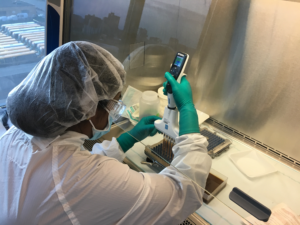
A: The Fecal Microbiome Therapeutics (FMT) & Stool Banking Toolkit is a no-cost guide for clinicians and researchers at accredited healthcare institutions interested in creating an in-house stool bank operation either for treatment of their Clostridioides difficile (C.diff) patients who don’t respond to standard therapies and for use in research.
For many years, we provided a network of more than 1300 hospitals with access to FMT that was rigorously screened, deep-frozen, and ready-to-use. By the end of 2024, we had distributed more than 70,000 investigational treatments for C. diff patients as well as 40 clinical trials. This toolkit consists of around 70 technical documents (Standard Operating Procedures (SOPs), work Instructions, and material specification sheets) that went through our full quality control processes to cGMP specifications. They are the same ones we used when we were the largest stool bank in the US.
Its templates are easily adapted to the needs of partners. It isn’t exactly plug and play, but it provides a significant leg up for sites that want to build on what the Foundation learned in more than a decade running a successful stool banking operation.
Q: Why was the Toolkit created?
A: OpenBiome Foundation’s mission is to expand patient access to microbiome therapies and fuel scientific discoveries that will shape the future of health. We do this by building partnerships, funding targeted innovations, and sharing open-access tools for the field.
This Toolkit forwards our mission and the field.
For many years, OpenBiome Foundation successfully partnered with physicians to bridge a critical treatment gap for patients with C. diff under the FDA’s policy of enforcement discretion. With the approval of two commercial products, our mission to expand safe access to FMT was accomplished, and we adhered to FDA’s Finalized Enforcement Discretion guidelines and ceased direct distribution of FMT.
This doesn’t mean the treatment gap is fully closed. Patients with fulminant C. diff, pediatric patients, and patients who either don’t qualify for or fail standard therapies are still in need of options.
Thankfully, the FDA understands these gaps and physicians are able to use traditional FMT to treat their patients as long as they are preparing the materials in-house.
And while we no longer distribute, we can still support our network by sharing the knowledge we developed over many years as the “FMT people.”
Q: Who can best utilize the Toolkit?
A:The primary beneficiaries of the Toolkit are the physicians looking to treat their own C. diff patients who meet the requirements set by the FDA policy of Enforcement Discretion, and researchers looking to study the use of FMT in other indications. OpenBiome has provided the material for the investigation of a wide-range of conditions ranging from peanut allergies and depression to indications like IBD, Graft Vs. Host, Multiple Sclerosis, and others. There continues to be a strong need and appetite for more research as we learn which indications are influenced by the microbiome like in Oncology, Immunotherapies, and myriad Digestive and Metabolic disorders. We want to support researchers in advancing this fascinating field and discovering new ways to help patients.
Q: What is the cost of the Toolkit?
A: The Foundation is offering the Toolkit free to accredited healthcare or research institutions.
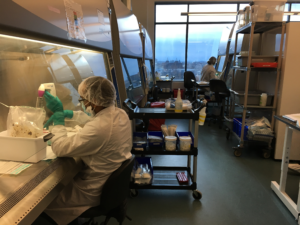
Cost to implement for the clinicians and researchers will vary considerably by site according to the scope of the operation they are pursuing. There are equipment costs for things like a -80 freezer, a biosafety cabinet, blenders, homogenizers, etc. A larger factor with more variability will be staffing and donor management. Qualified donors are, by design, rare. Staff will need to recruit, clear, and manage donors from onboarding through routine testing to ensure their donations are as safe and usable as possible.
Scope will determine the rest. A site using this material solely to treat their own C. diff patients can build a defined inventory of preparations and keep them in long-term storage for years without needing a permanent manufacturing process in place. If there is interest in using the material for other use cases like in research, there are other regulatory and quality obligations that will incur additional recurring costs.
Q: How do I learn more about the Toolkit?
Mike is available to answer additional questions and see if the Toolkit fits your clinical and research needs. He can be reached at: [email protected].
Additional Resource

Our mission: Expand patient access to microbiome therapies and drive scientific discoveries that shape the future of health. We build partnerships, fund innovation, and share open-access tools, so that the impact of microbiome science lives on, long after our mission is complete.
Continue Reading

OpenBiome Foundation Launches First Free Fecal Microbiome Therapeutics (FMT) & Stool Banking Kit for Clinicians and Researchers

OpenBiome Foundation Announces New Board Leadership

Her son needed a fecal transplant for a fearsome C. diff infection. Getting one required a tortuous journey
